
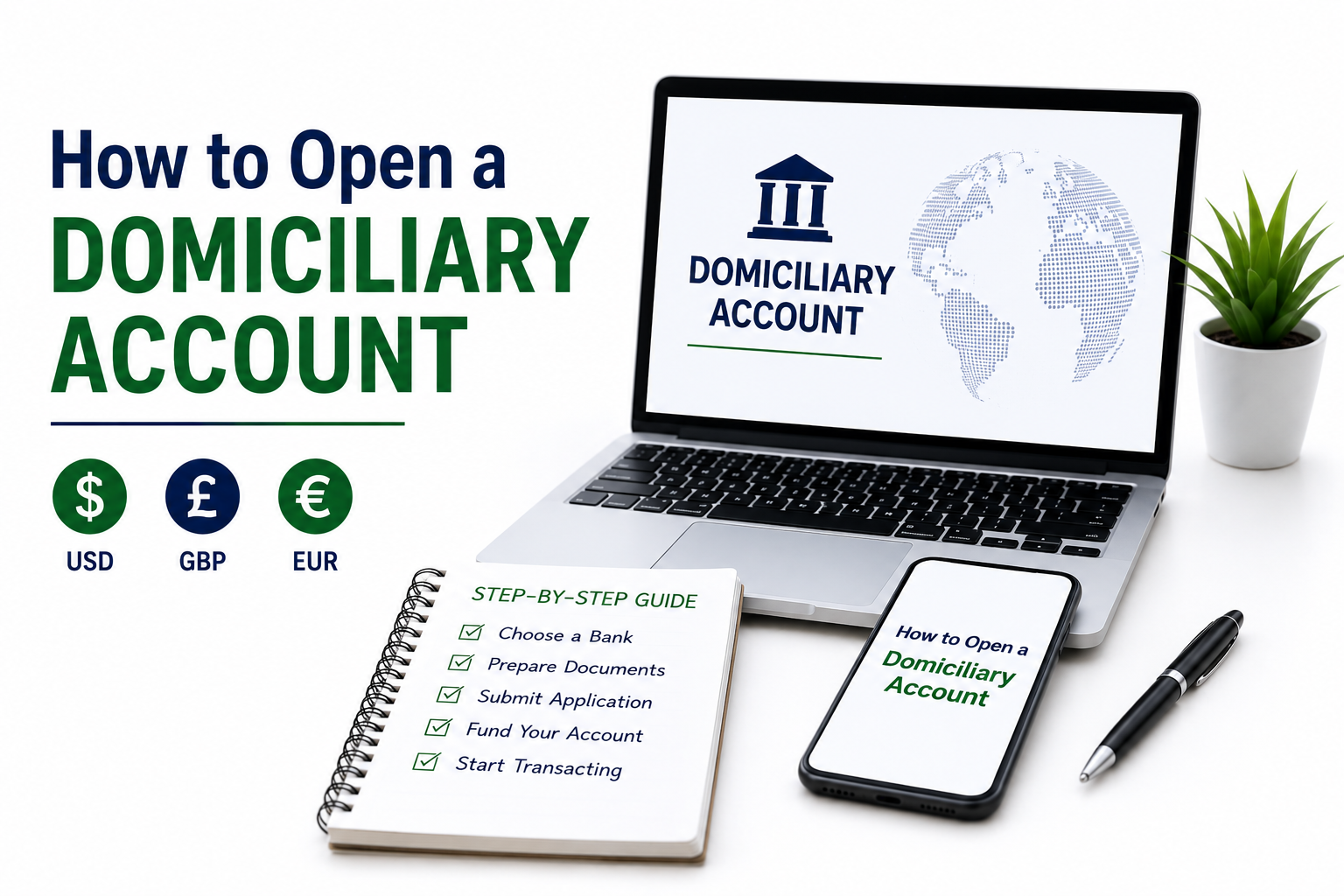
If you receive money from abroad or want to save in foreign currencies, a domiciliary account can make managing your money much easier.
A domiciliary account allows you to receive, send, and save money in foreign currencies without automatically converting it into your local currency. This makes it a great option for freelancers, business owners, online workers, students, travellers, and anyone who regularly deals with international payments.
In this guide, you'll learn what a domiciliary account is, its benefits, the documents you'll need, and how to open one step by step.
What Is a Domiciliary Account?
A domiciliary account is a type of bank account that allows you to keep and use foreign currencies such as:
US Dollars (USD)
British Pounds (GBP)
Euros (EUR)
Unlike a regular savings or current account, a domiciliary account lets you receive and hold foreign currency without converting it into your local currency immediately.
For example, if someone sends you 500 US dollars from another country, the money stays in dollars until you decide to withdraw or exchange it.
Why Should You Open a Domiciliary Account?
A domiciliary account offers many advantages, especially if you deal with international transactions.
Here are some of the main benefits:
Receive money from people in other countries.
Send money to other countries.
Save money in foreign currencies.
Pay for international goods and services.
Shop on international websites.
Help protect your savings from changes in the local currency's value.
Make travelling abroad more convenient.
Whether you're a freelancer getting paid by overseas clients or a student receiving money from family abroad, a domiciliary account can make managing foreign currency much easier.
Who Needs a Domiciliary Account?
A domiciliary account isn't just for businesses. Many individuals can benefit from having one.
It may be useful if you are:
A freelancer working with international clients.
Someone who works remotely and earns in foreign currency.
An importer or exporter.
A business owner dealing with overseas suppliers.
A student studying abroad.
A traveller who regularly visits other countries.
Someone who receives financial support from family overseas.
If you regularly send or receive foreign currency, opening a domiciliary account can save time and reduce unnecessary currency conversions.
Requirements to Open a Domiciliary Account
Banks may have slightly different requirements, but you'll usually need the following:
A valid means of identification (National ID, Passport, Driver's Licence, or Voter's Card).
Your Bank Verification Number (BVN), if required by the bank.
A recent utility bill or another proof of address.
Passport-sized photographs if requested.
A completed account opening form.
The required minimum opening deposit.
Some banks may request additional documents, so it's always a good idea to check before applying.
How to Open a Domiciliary Account
Opening a domiciliary account is usually a straightforward process.
Step 1: Choose the Right Bank
Begin by choosing a bank that offers domiciliary accounts and compare its fees, features, and services before making your decision.
Consider:
Account maintenance fees
International transfer charges
Online banking features
Customer support
Minimum opening balance
Choosing a bank with reliable online services can make managing your account much easier.
Step 2: Gather Your Documents
Before visiting the bank, make sure you have all the required documents ready.
Having everything prepared helps avoid delays during the application process.
Step 3: Complete the Application Form
Fill in the account opening form carefully.
Ensure your personal details are accurate, including your name, address, phone number, and identification details.
Step 4: Submit Your Documents
Provide all requested documents to the bank.
Some banks may also ask you to verify your identity before approving your application.
Step 5: Fund Your Account
Some banks require an initial deposit before activating your account.
Once your account is active, you can begin receiving and sending foreign currency.
How Can You Fund a Domiciliary Account?
Funding your domiciliary account is simple and can be done in several ways.
These include:
Receiving international bank transfers.
Cash deposits in supported foreign currencies.
Transfers from another domiciliary account.
Payments from overseas employers or clients.
The available funding options depend on your bank's policies.
Benefits of a Domiciliary Account
Opening a domiciliary account comes with several advantages.
1. Receive Foreign Currency
You can receive money directly in dollars, pounds, or euros without immediate conversion.
2. Easier International Payments
Paying for online subscriptions, tuition fees, or international purchases becomes much simpler.
3. Save in Foreign Currency
Holding foreign currency can help protect your savings from changes in local exchange rates.
4. Faster International Transactions
Sending and receiving money internationally is generally more convenient with a domiciliary account.
5. Greater Financial Flexibility
You have more control over when to convert your foreign currency.
Are There Any Disadvantages?
Like any financial product, domiciliary accounts have a few drawbacks.
Some possible disadvantages include:
Account maintenance fees.
International transfer charges.
Minimum balance requirements at some banks.
Exchange rate differences when converting currencies.
Understanding these costs before opening an account will help you choose the best option.
Tips for Choosing the Best Bank
Not all banks offer the same services.
Before opening an account, compare:
Transfer fees
Customer service
Mobile banking features
Foreign currency availability
Branch accessibility
Online banking security
Taking time to compare banks can help you avoid unnecessary costs later.
Common Mistakes to Avoid
Many people make avoidable mistakes when opening a domiciliary account.
Here are a few to watch out for:
Applying without checking the bank's requirements.
Forgetting important documents.
Sharing your banking details with strangers.
Ignoring transfer and maintenance fees.
Using unofficial channels for foreign transfers.
Taking a little extra care can help you avoid problems and save time andmoney.
Tips for Managing Your Domiciliary Account
Onceyouraccount is active,followthese simple tips:
Monitor your account regularly.
Keep your login details secure.
Enable security alerts if available.
Store important documents safely.
Keep your contact information updated.
Review your transaction history often.
Good account management helps keep your money safe.
Domiciliary Account vs Regular Savings Account
Feature | Domiciliary Account | savings account
Currency /Foreign currencies /Local currency
International Transfers / Yes / Limited
Overseas Payments / Yes /Usually No
Foreign Currency Savings /Yes. / No
Everyday Local Banking / Limited /Yes
Frequently Asked Questions
Can I receive US dollars in a domiciliary account?
Yes. Most domiciliary accounts allow you to receive US dollars, British pounds, euros, and other supported foreign currencies.
Can I open a domiciliary account online?
Some banks allow online applications, while others require you to visit a branch. Check with your preferred bank to find out which option they offer.
Is there a minimum opening balance?
Some banks require a minimum deposit before activating your account. The amount varies from one bank to another.
Can I withdraw money from my domiciliary account?
Yes. Depending on your bank, you may be able to withdraw foreign currency or convert it into your local currency.
Is a domiciliary account safe?
Yes, provided you open your account with a licensed bank and keep your banking information secure.
Final Thoughts
Opening a domiciliary account is a smart choice if you regularly send, receive, or save money in foreign currencies. It offers greater flexibility for international transactions and can make managing overseas payments much easier.
Before choosing a bank, compare the fees, account features, and customer support. Make sure you understand the requirements and any charges that may apply.
With the right domiciliary account, you'll be able to manage your foreign currency confidently, whether you're a freelancer, business owner, student, traveller, or someone who receives money from abroad.



No comments yet.