
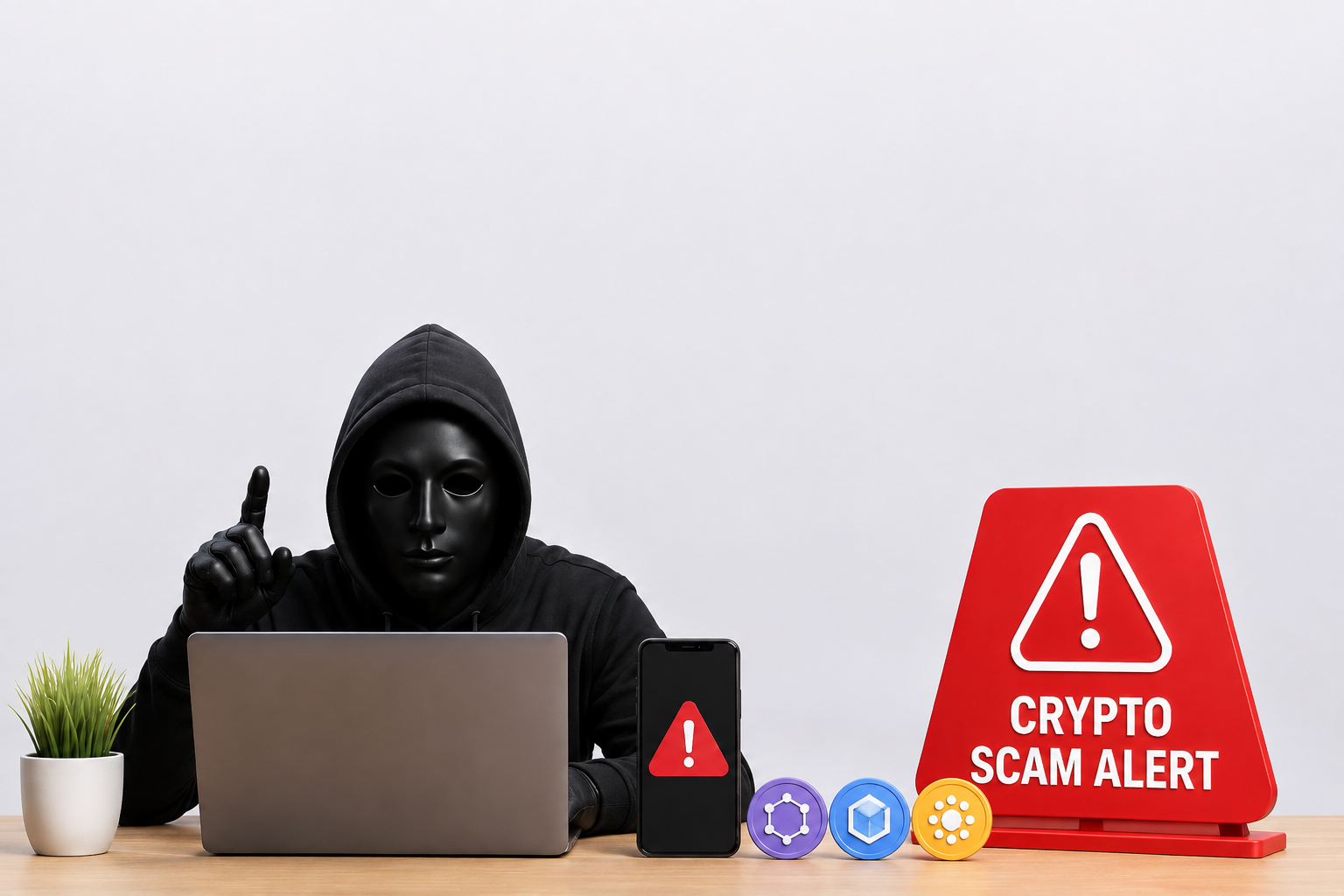
Cryptocurrency has created exciting opportunities for investing, trading, and sending money across the world. Millions of people now own digital assets like Bitcoin, Ethereum, and other cryptocurrencies. However, as the crypto market continues to grow, so do the number of scammers looking to steal people’s money.
Whether you’re a beginner or someone who has been investing in crypto for years, knowing how these scams work can help you protect your funds. In this guide, we’ll explain the most common crypto scams, how to recognize them, and simple steps you can take to stay safe.
What Are Crypto Scams?
Crypto scams are fraudulent schemes designed to trick people into sending cryptocurrency or revealing sensitive information like wallet recovery phrases, passwords, or private keys.
Unlike traditional bank transfers, cryptocurrency transactions are usually irreversible. Once you send your crypto to a scammer, recovering it is often impossible.
That’s why learning to identify scams before becoming a victim is so important.
1. Fake Investment Platforms
One of the most common crypto scams involves fake investment websites or apps that promise guaranteed profits.
These platforms often advertise on social media or messaging apps, claiming you can double or triple your money within days. At first, they may even allow you to withdraw a small amount to gain your trust. Once you invest more money, they disappear or block your account.
Warning Signs
Guaranteed high returns
Pressure to invest immediately
No company information
Fake customer reviews
2. Phishing Scams
Phishing scams try to steal your login details or wallet recovery phrase.
Scammers create fake websites that look almost identical to real cryptocurrency exchanges or wallets. Scammers may send emails, text messages, or fake alerts asking you to verify your account or update your wallet details.
If you enter your information, they can instantly access your crypto.
How to Stay Safe
Always check the website URL.
Bookmark official crypto websites.
Never share your wallet recovery phrase.
Enable two-factor authentication (2FA).
3. Giveaway Scams
You’ve probably seen social media posts claiming:
“Send 0.1 BTC and receive 0.2 BTC back!”
These are classic giveaway scams.
Scammers often impersonate celebrities, influencers, or well-known crypto companies to make the offer seem real. Once you send your cryptocurrency, you’ll never receive anything in return.
Remember:
No legitimate company will ask you to send crypto to receive more back.
4. Romance Crypto Scams
Romance scams have become increasingly common.
A scammer builds an online relationship with someone over weeks or even months before introducing a “great crypto investment opportunity.”
Victims often trust the person because of the emotional connection and end up losing large amounts of money.
If someone you’ve never met starts encouraging you to invest in crypto, be extremely cautious.
5. Fake Customer Support
Scammers pretend to be customer support agents from popular cryptocurrency exchanges or wallet providers.
They may contact you through social media, WhatsApp, Telegram, or fake phone numbers.
They’ll ask for:
Wallet recovery phrase
Private keys
Login password
Verification codes
Real customer support will never ask for this information.
6. Rug Pulls
A rug pull happens when developers launch a new cryptocurrency project, attract investors, then suddenly disappear with the money.
These scams are common with new meme coins and unknown tokens.
Before investing in any new project, research the team, roadmap, and community.
7. Fake Crypto Apps
Some fake wallet or trading apps appear in unofficial app stores or are shared through advertisements.
These apps can steal your login information or secretly transfer your crypto.
Only download cryptocurrency apps from official app stores and verify the publisher before installing.
How to Protect Yourself
Taking a few simple steps today can help you avoid costly crypto scams in the future.
Never share your recovery phrase or private keys.
Use strong, unique passwords.
Enable two-factor authentication.
Double-check website addresses.
Research any investment before sending money.
Be cautious of offers that promise easy or guaranteed profits.
Store large amounts of crypto in a hardware wallet when possible.
What Should You Do If You Get Scammed?
If you believe you’ve been scammed:
1. Stop sending additional money.
2. Contact your crypto exchange immediately.
3. Change your passwords.
4. Report the scam to the appropriate authorities in your country.
5. Warn others so they don’t become victims.
Be cautious of people claiming they can recover your lost cryptocurrency for a fee. Many of these are recovery scams that target victims a second time.
Final Thoughts
Cryptocurrency offers exciting opportunities, but it also attracts scammers looking to take advantage of unsuspecting users. The good news is that most common crypto scams follow predictable patterns. By staying informed, verifying information, and avoiding offers that promise guaranteed profits, you can significantly reduce your risk.
Always remember that protecting your cryptocurrency starts with you. Take your time before making any investment, use trusted platforms, and never share your private information. A few extra minutes of caution today can save you from losing your digital assets tomorrow.

No comments yet.