
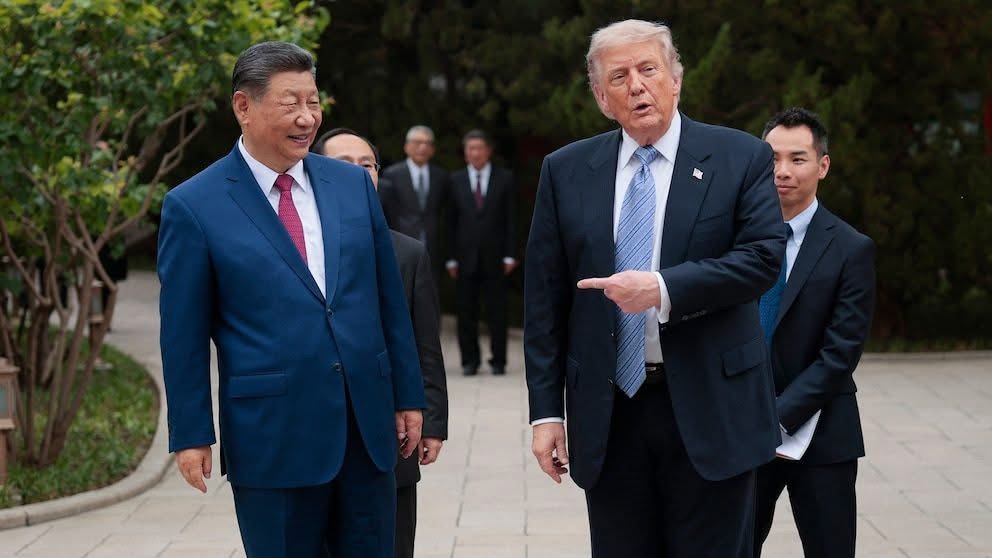
The recent meeting between the President of the United States and the President of China focused heavily on restoring calm and stability in relations between the two global powers. Both leaders presented a positive tone during discussions, stressing the importance of maintaining cooperation and avoiding further escalation in tensions.
However, despite the friendly messaging, several major issues remain unresolved, including disagreements over Taiwan, Iran, and international trade.
During the talks, both sides acknowledged the need to keep communication open and prevent misunderstandings that could worsen existing tensions. The meetings were described as constructive, with officials highlighting progress in dialogue rather than final agreements.
One of the biggest sticking points continues to be Taiwan, where political and security concerns remain sensitive for both nations. The topic of Iran also featured in discussions, particularly around regional stability and security risks. Trade relations were another major focus, with both countries seeking ways to reduce economic friction while protecting their national interests.
Even though leaders emphasized “stability” and cooperation, analysts say the core disputes between the two countries remain far from resolved. Many of the biggest geopolitical and economic questions were left open for future negotiations.
Public reactions to the summit have been mixed. Some observers see the talks as a positive step toward preventing conflict and maintaining global balance. Others believe that without concrete agreements, the meeting only provided temporary reassurance rather than real solutions.
Still, both sides agreed to continue diplomatic engagement, signaling that dialogue between the world’s two largest economies will remain active in the coming months.
For now, the message from both capitals is clear: cooperation is possible, but deep disagreements are still very much on the table.


No comments yet.